


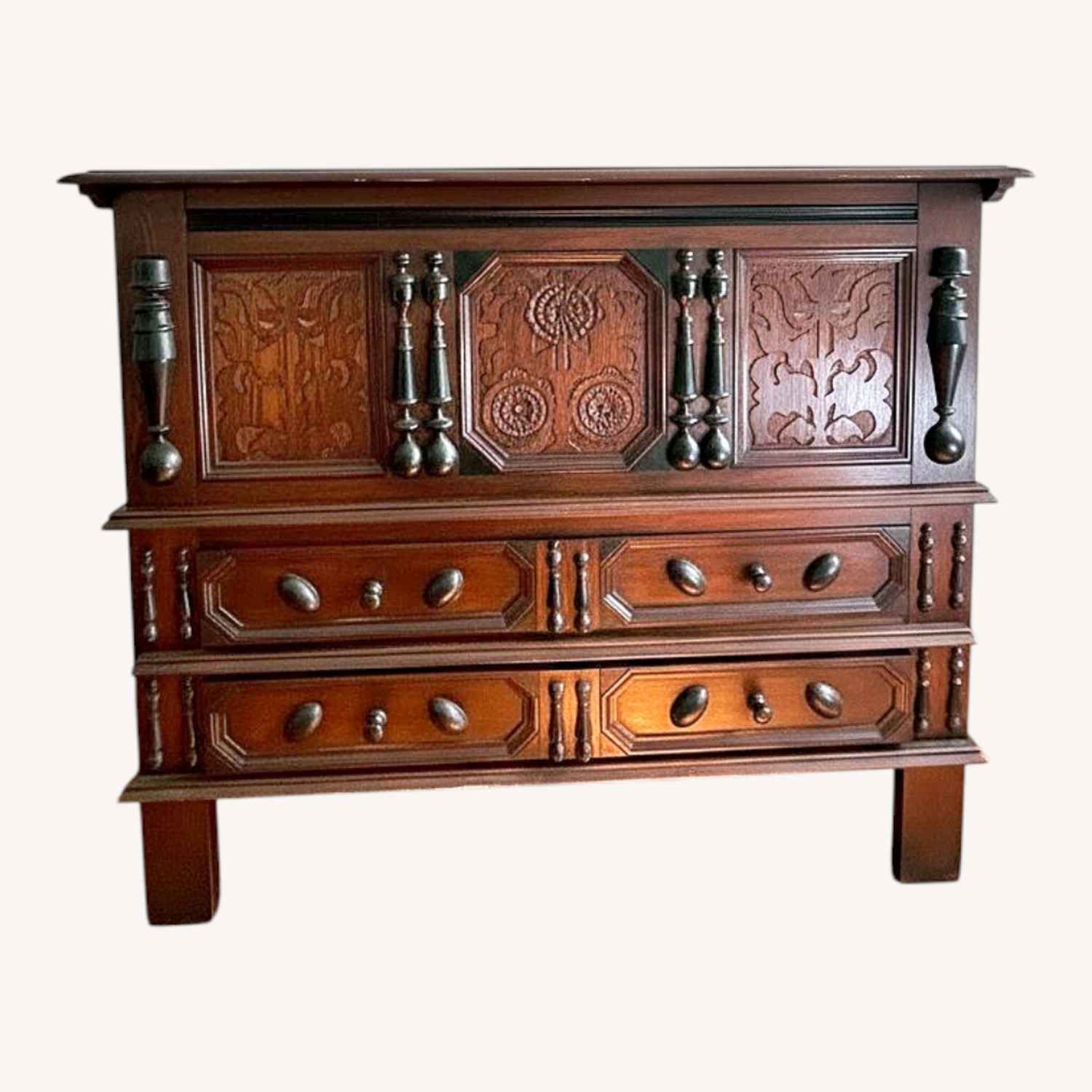
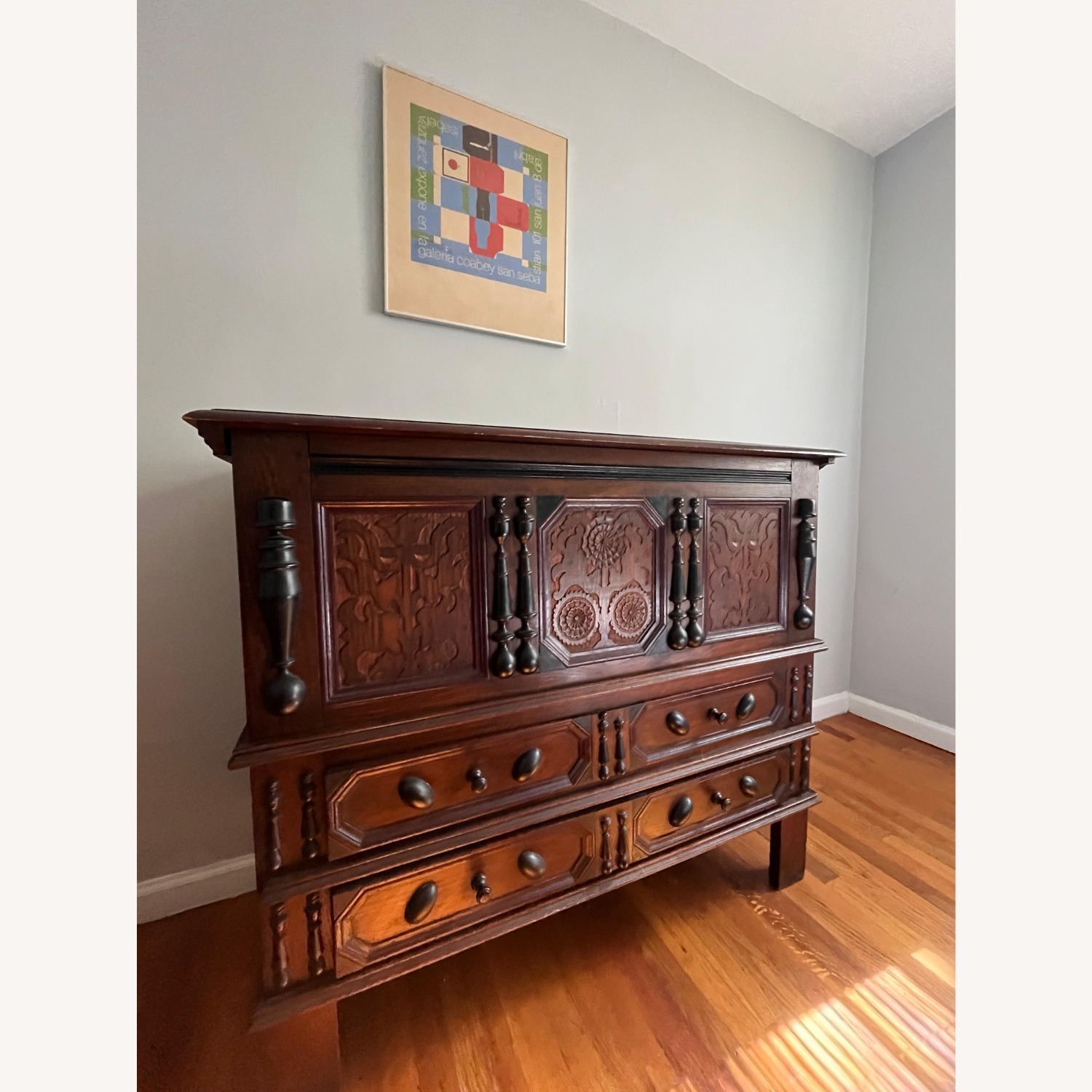
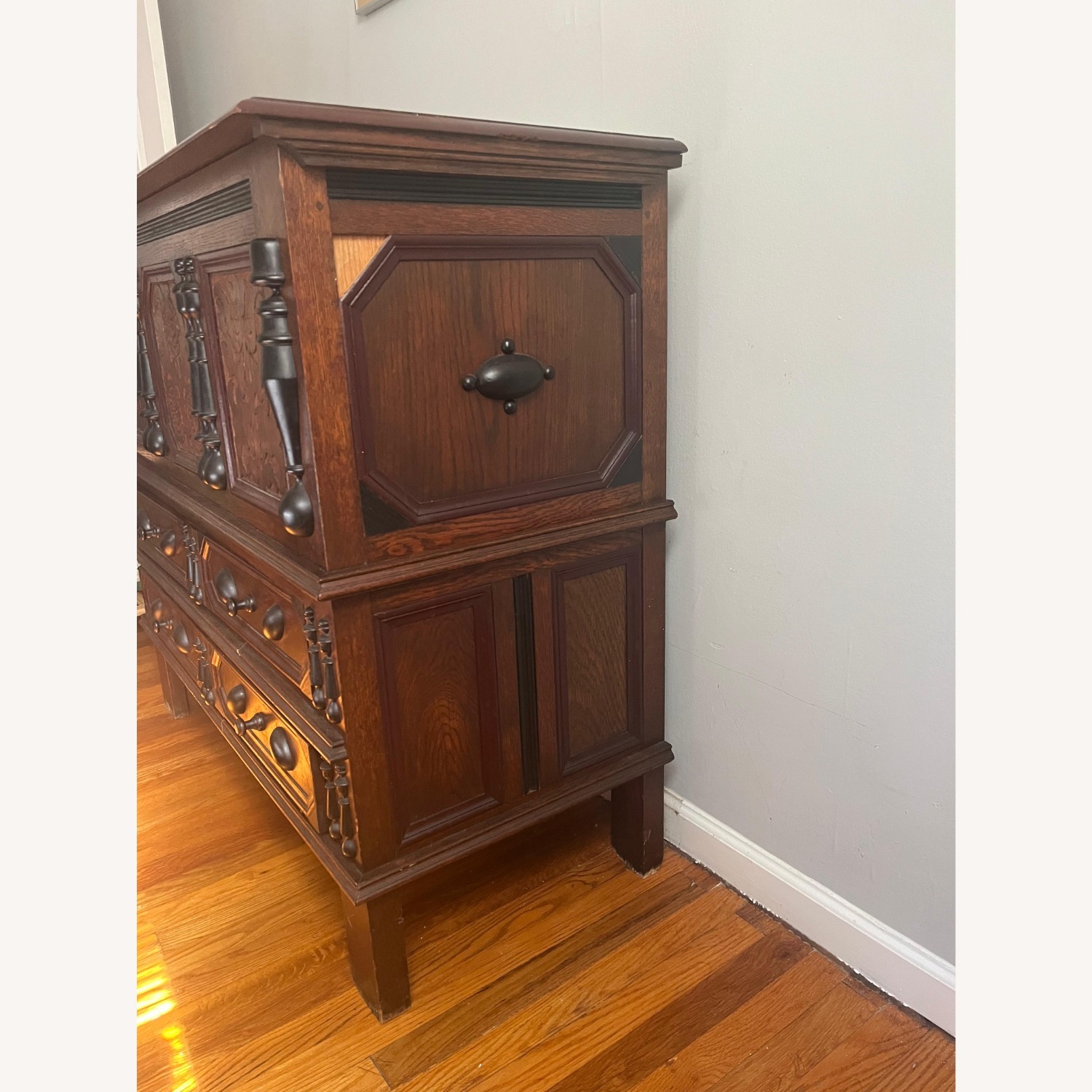
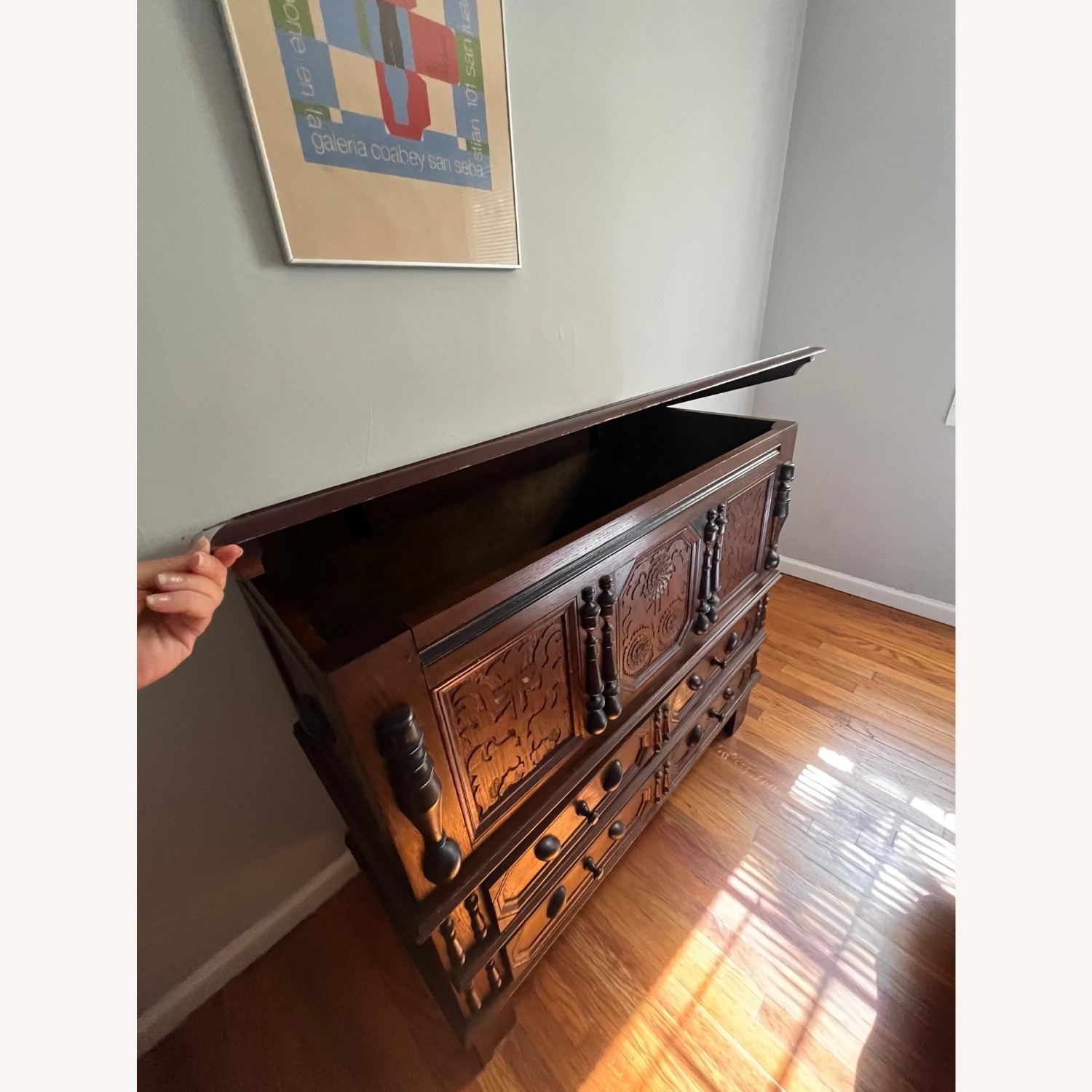

Vintage/Antique Dark Brown Wood Chest
 or
or 
Nationwide delivery available

Experience seamless delivery with our vetted and trained pros. Delivery nationwide will be facilitated by our white glove delivery partner typically within a few weeks.
Visit our FAQs to learn more about delivery and our coverage areas.
Free - Local pickup available
Located in Rockville, MD 20850
Product details
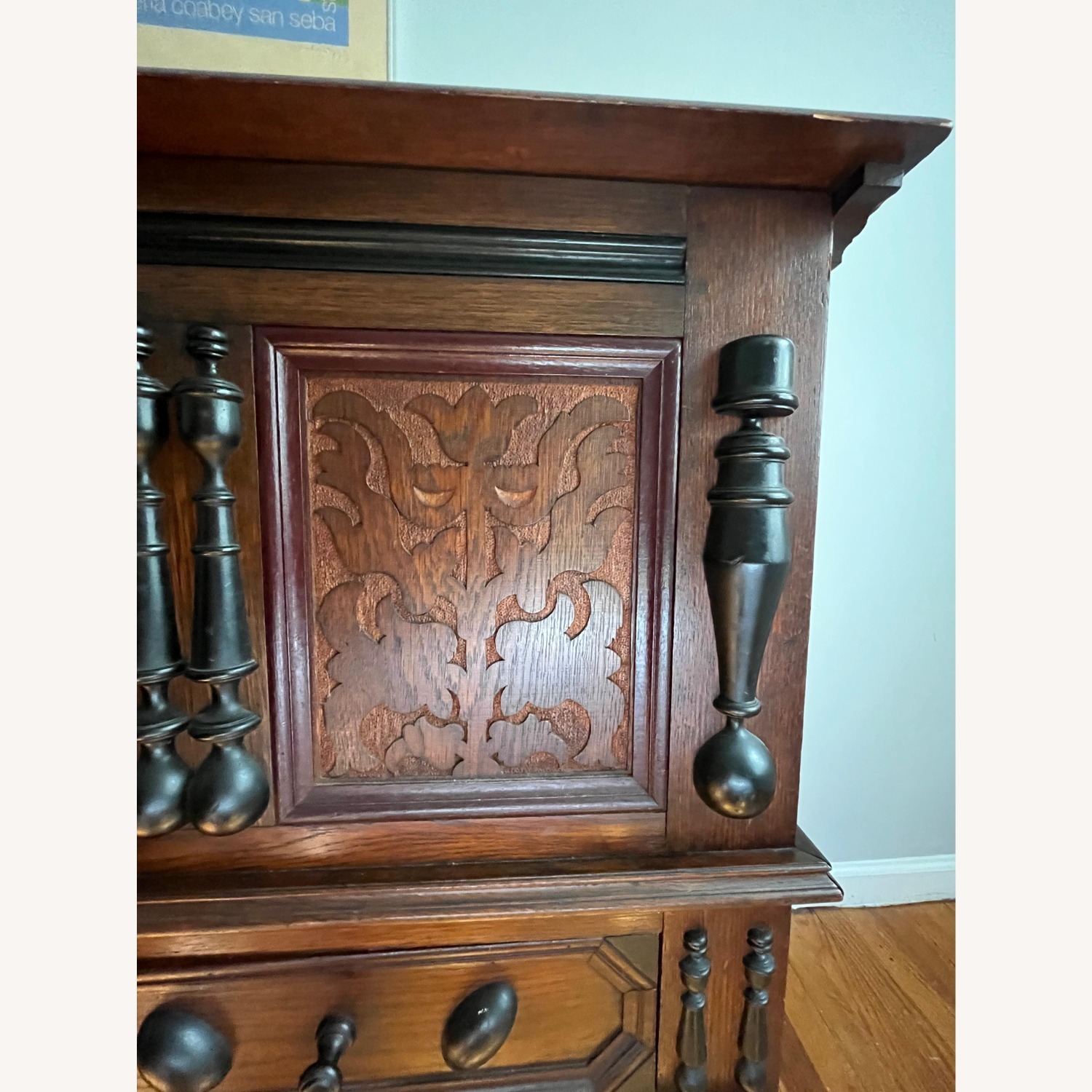
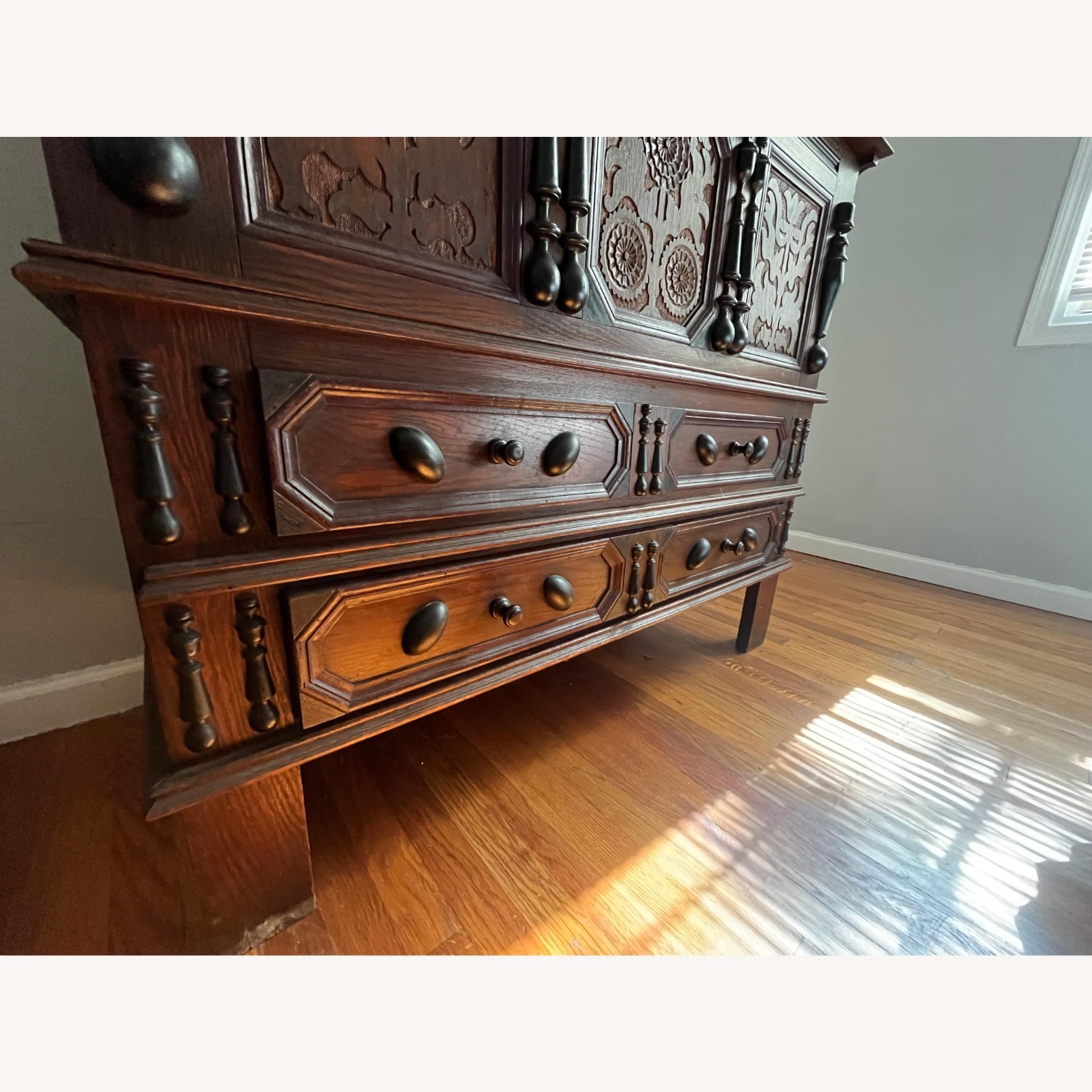
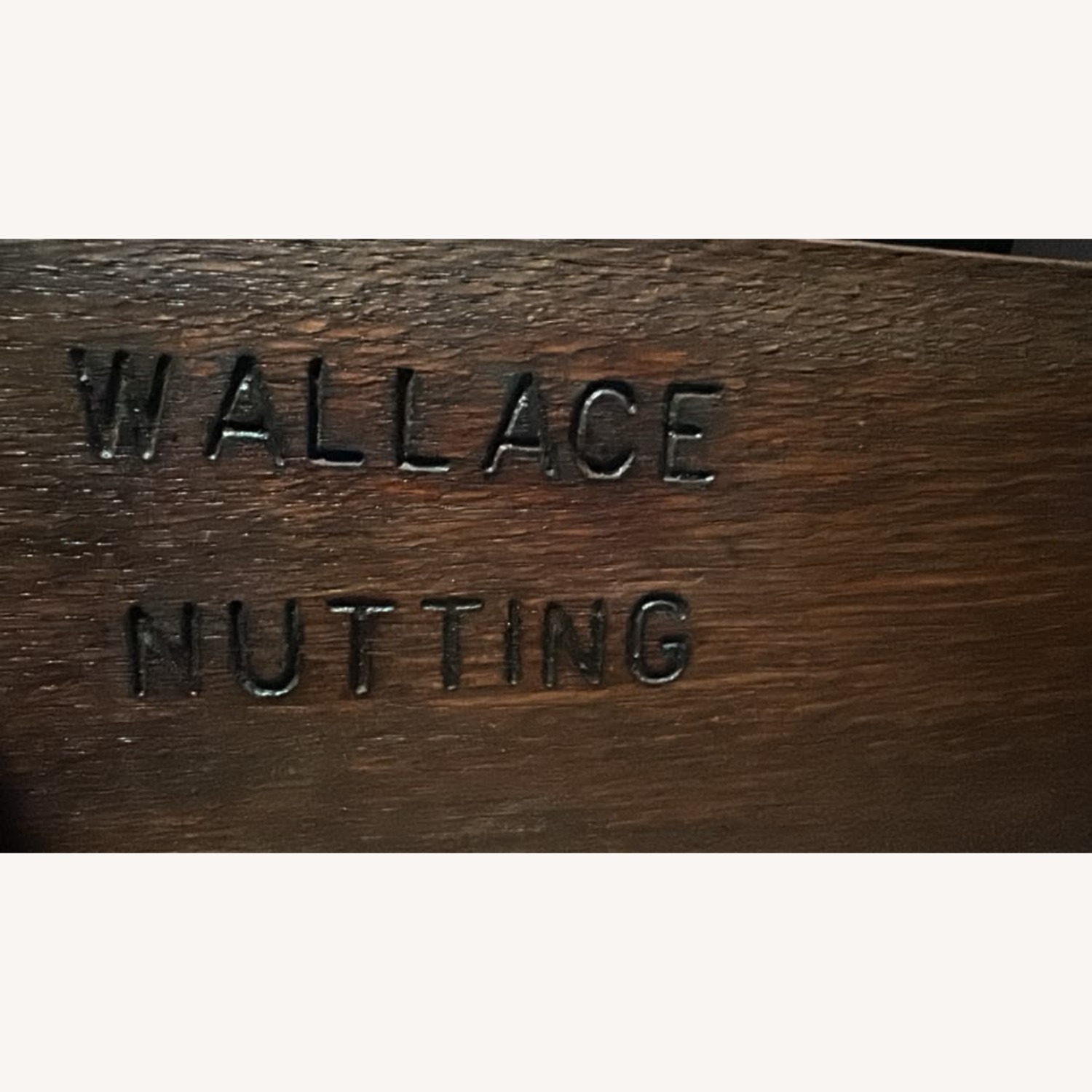
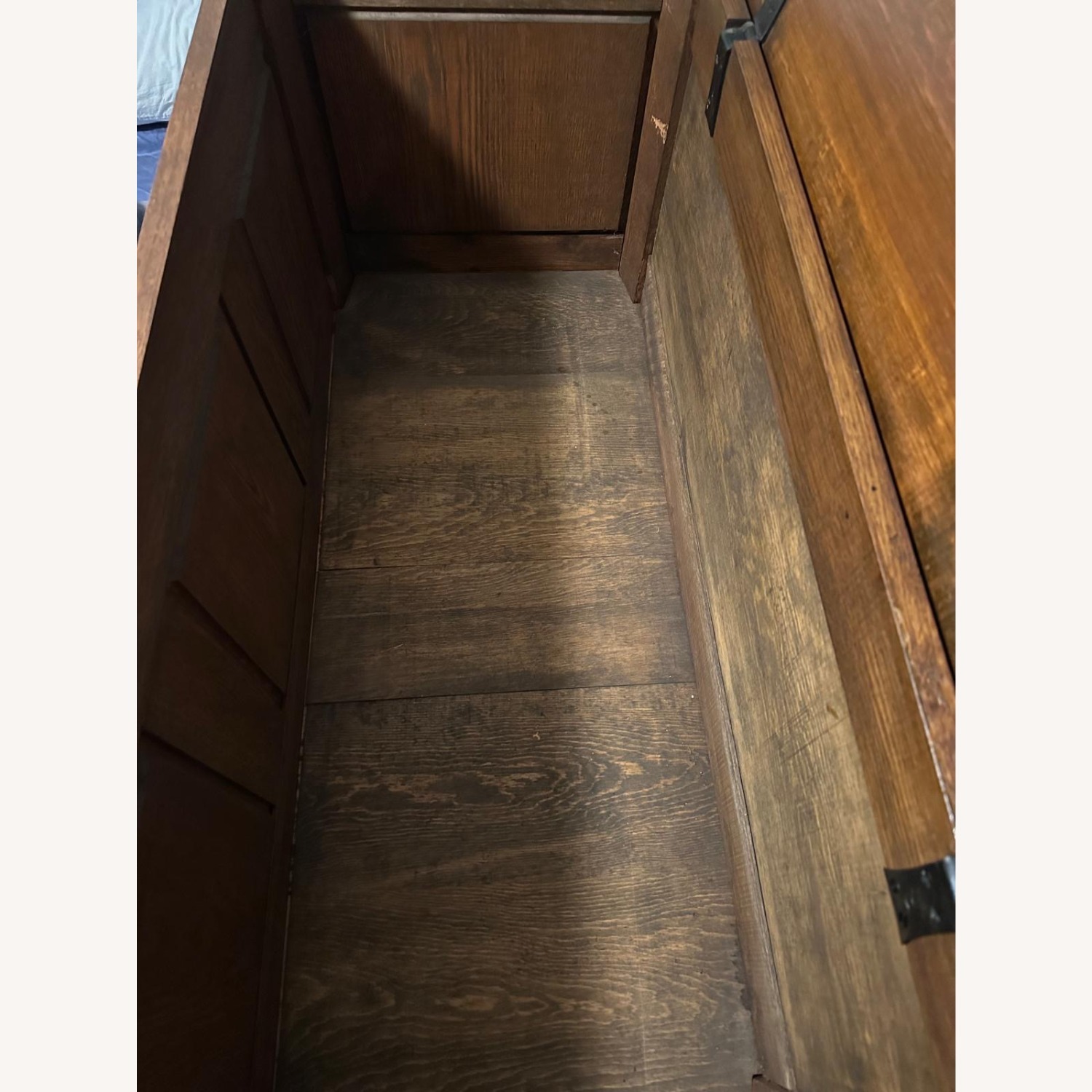
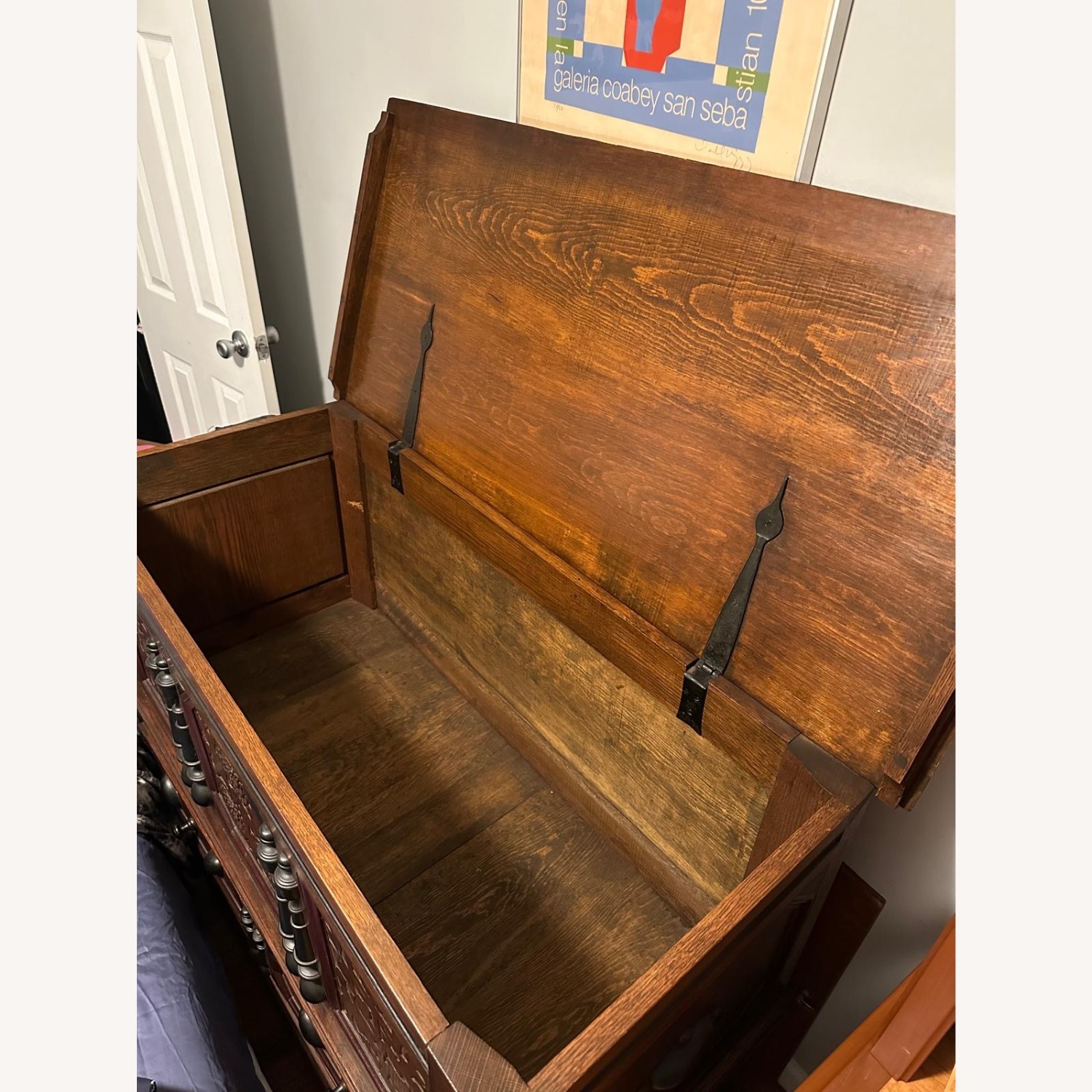
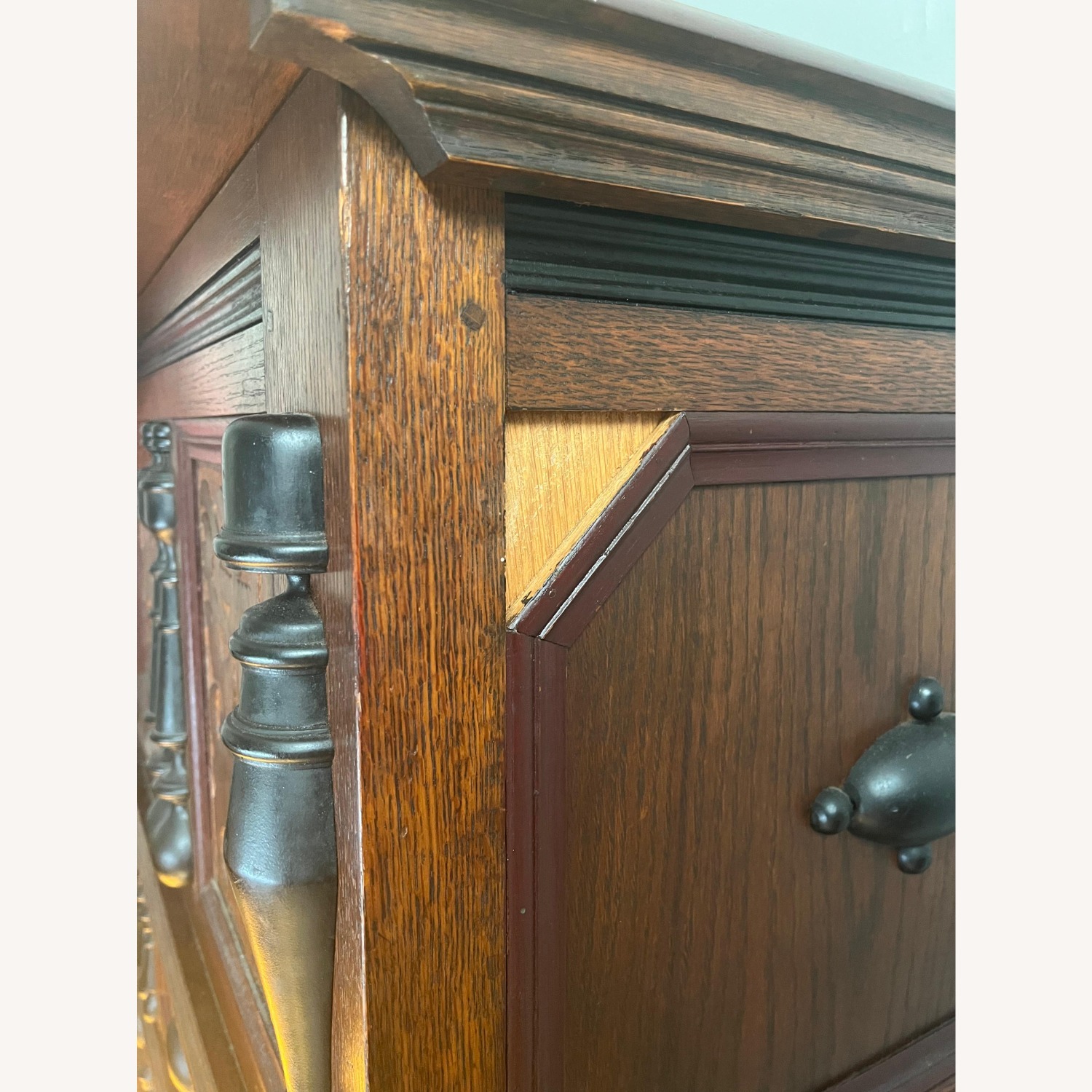
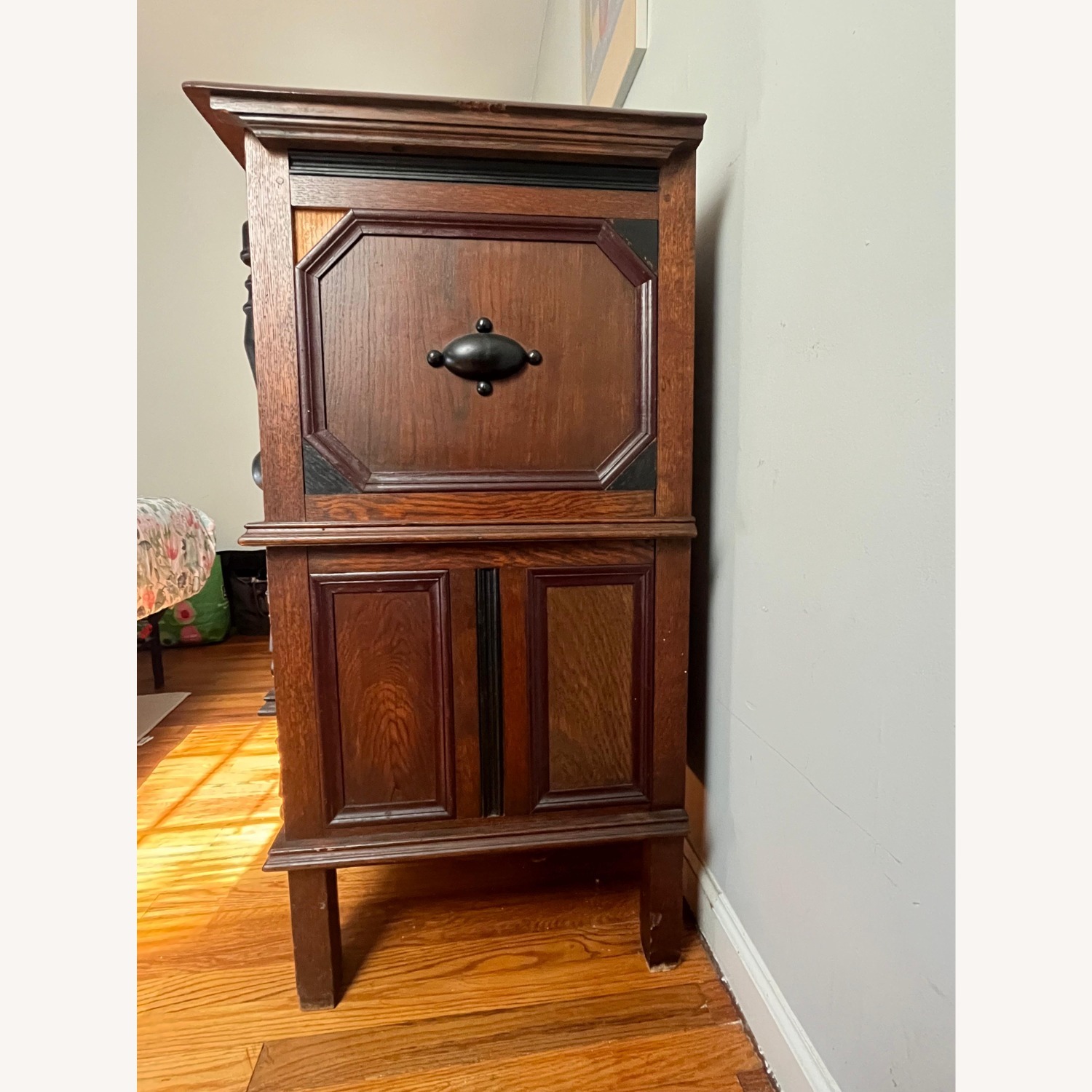
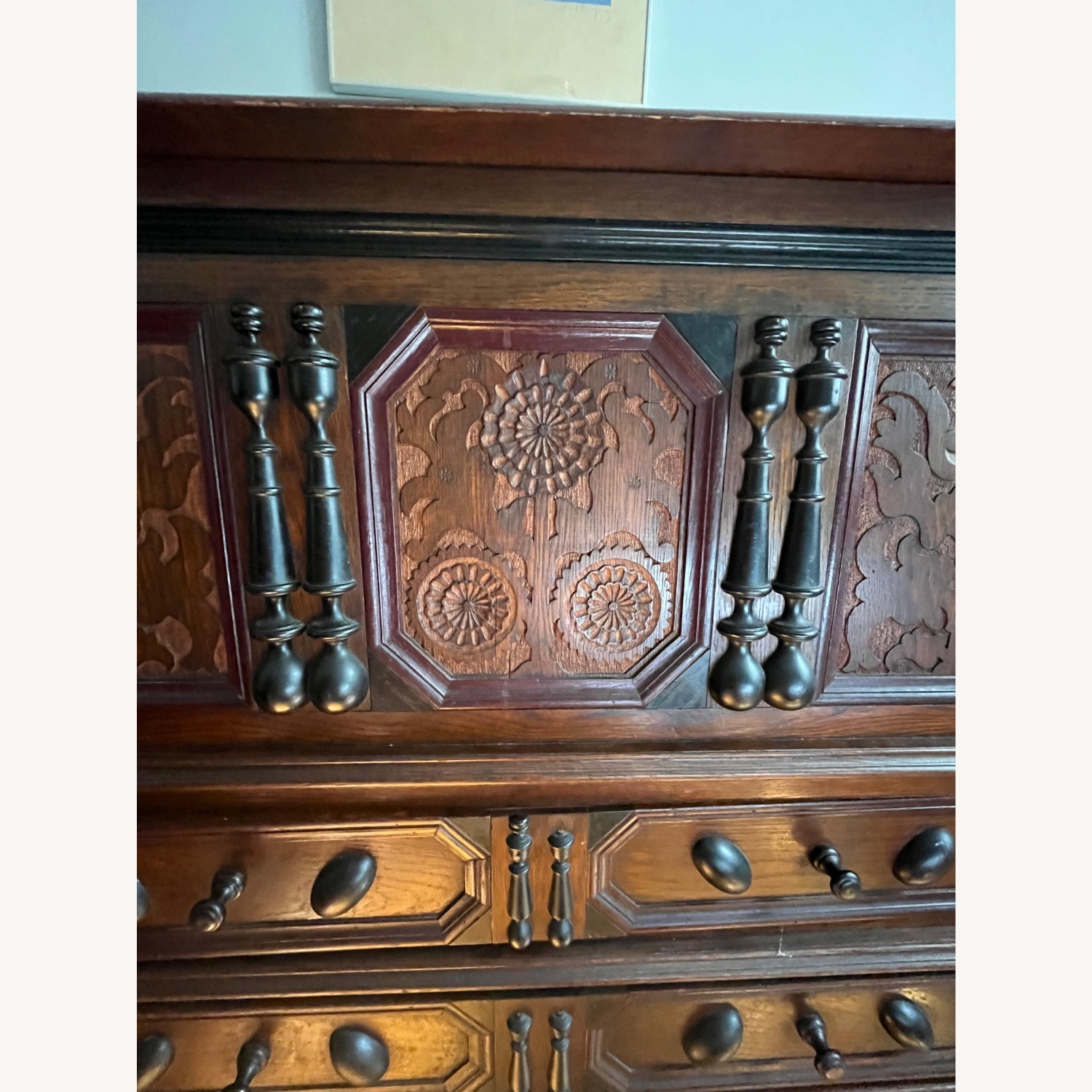
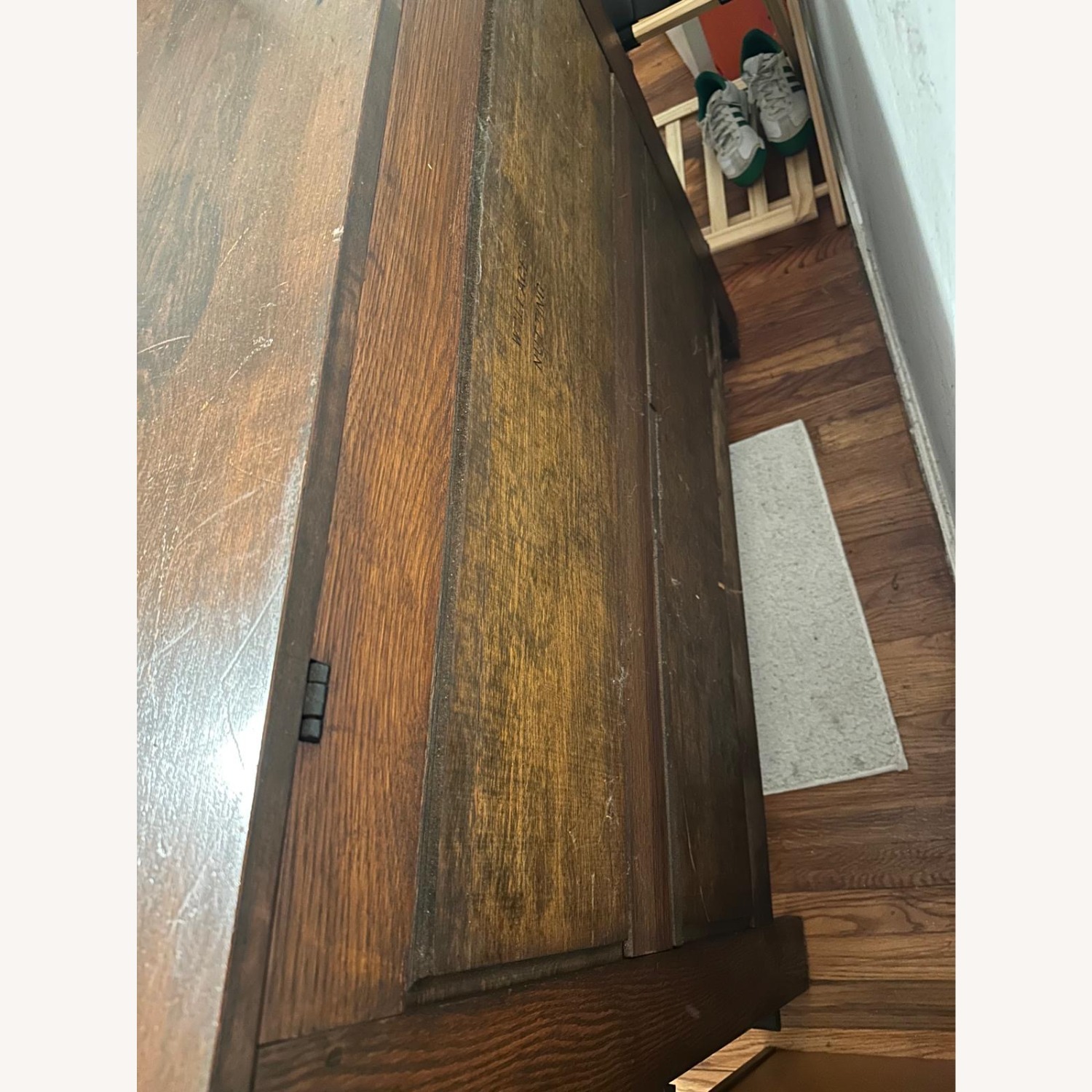
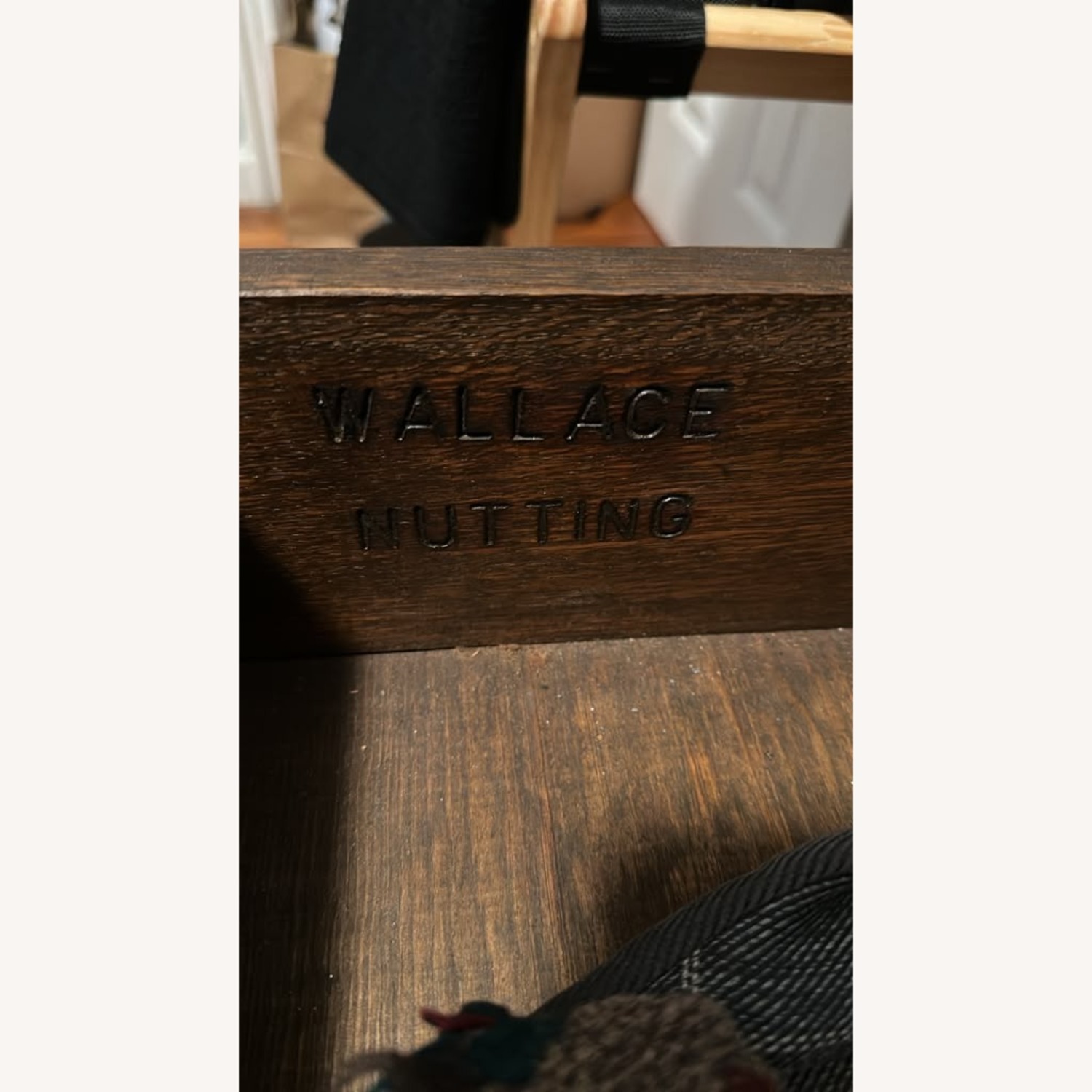
Seller's Notes:Pick up between 7/22 (evening) and 8/10 near Rockville Town Center (MD). Original finish & good condition (see one area of missing wood). MEASUREMENTS: Ht. 40" W 48" D 21" Est. value at least $3,000 Authentic -- see branded stamps in photos! Bought at Weschler's Auctioneers & Appraisers many years go, and no longer have room for it. The piece for sale is identical to #931 Sunflower Two-Drawer Chest, manufactured by Wallace Nutting, Inc. (American, active c. 1917-41). Oak, pine, and iron. Please be prepared to pay cash or Zelle, and to pick up as soon as possible between Sunday 7/19 (evening) and 8/10. At least two strong people will be needed to move the chest. But it is on the first floor, no steps to enter. LOCATION: Near Rockville Town Center. MANUFACTURER HISTORY: This Two Drawer Sunflower Chest design dates to the 1600s c. 1670, possibly the Peter Blin Shop tradition, made in oak and pine. Historian Wallace Nutting assembled a collection of such Pilgrim-era furniture, and made replications of it. This piece is likely from Wallace Nutting's reproductions in the early 1920s, but may be older. Wallace Nutting (1861-1941) was a Harvard-educated Congregational minister-turned historian, who assembled a collection to serve as prototypes for his reproduction furniture business, props in his photographs, and fodder for his scholarship on American decorative arts. Mr. Nutting’s collection boasts hundreds of objects from everyday life in seventeenth and early eighteenth century New England with a selection of material from the mid-Atlantic and Southern regions. SUNFLOWER CHESTS: Cherished by collectors and historians since the late 1800s, Sunflower chests and cupboards were once referred to as “Hartford” or “Connecticut” furnishings. They captured the public’s attention with bold designs and connections to the nostalgic “Pilgrim” era. The centennial celebrations of 1876 spurred a fascination with antiques, which gave rise to a market for these objects and inspired the Colonial Revival, a style popular in mainstream America for most of the twentieth century. Legendary early collectors and American tastemakers, like Connecticut’s Emily Seymour Goodwin Holcombe (1852-1923), Henry Wood Erving (1851-1941), and Wallace Nutting (1861-1941) extolled the virtues of colonial America by collecting and celebrating artifacts related to an idealized past, including so-called Sunflower furniture from the Connecticut River Valley. In fact, Erving once owned this chest; it was later sold to Nutting and then donated to the Wadsworth in 1924. These early connoisseurs imbued this grouping of furniture with meaning and myth that still persists today. With approximately eighty-five identified examples, Sunflower chests and cupboards are the largest assemblage of seventeenth century Connecticut casework known. This joined furniture was so named because of the motif on the carved central panel; however, these carved stylized flowers, laid out with a rule and compass, are probably not sunflowers, but instead may be generic floral representations. Although there are variations within the group, most often the central panel is decorated with three flowers on a central stem, one with rounded and two with dog-tooth shaped pedals, flanked by asymmetrical fluted tulips. The chest’s overall aesthetic—created through applied moldings and turnings, low-relief carving, and paint—reflects the transmission of late Medieval and Renaissance design. The use of similar floral motifs can be found on textiles, silver, and other crafts influenced by the late Mannerist style which was popular in England a century earlier and became pervasive in the Americas. Containers with a hinged lid used for storage, called chests, were one of the most common furniture types since the Medieval era, while the chest of drawers was not introduced into wealthy urban English homes until about the 1630s. A hybrid of the two forms, this chest with its bottom drawers, represents an increase in overall wealth and a need to store smaller items. Through applied moldings, split-spindles, bosses, and low-relief floral and vine carving, this furnishing represents an innovation in both decoration and form. Sunflower chests have been closely associated with Wethersfield, Connecticut and the joiner Peter Blin (c. 1640-1725), one of the town’s several woodworkers. However, the story is much more complex. There are notable examples, such as a related chest once owned by Emily Seymour Goodwin Holcombe, a direct descendant of Wethersfield woodturner Nathaniel Foote (1647-1703), that show a strong connection between this furniture tradition and other craftsmen working near Hartford. Evidence suggests the Sunflower grouping was the result of many hands responding to popular demand and working within multiple workshops in central Connecticut. The chest with drawers would have been a focal point within the seventeenth-century home. When purchased by Wallace Nutting, he heralded this chest as one of the great examples of early American design. Considered the principle authority on early American furniture for much of the twentieth century, Nutting amassed a significant collection—mostly serving as props for his hand-colored platinotypes (platinum print photographs) of fictitious colonial scenes and his historic homes, called “Wallace Nutting Chain of Colonial Picture Houses.” In 1917, Nutting started a reproduction furniture business and this Sunflower chest was used as a prototype. Copies were sold to clientele wishing to purchase a relic of America’s “Pilgrim” past.
Brand: Vintage/Antique
Collection: Wallace Nutting Sunflower Blanket Chest
Condition: Used - Satisfactory: Moderate wear and tear, but still has many good years left
Wear and tear details: Missing veneer finish in one area
Age: 100+ Years Old
Overall Dimensions: Width: 48 inches, Height: 40 inches, Depth: 21 inches

Sustainability Impact
By purchasing this item, you’re contributing to a more sustainable future.
Click to Learn More
105

38

8

You might also like:



Meet our delivery team
Our delivery team does more than move furniture - they’re here to support customers and make the process of buying, selling and moving furniture easy. They make what we do possible.
Learn more about our delivery team