


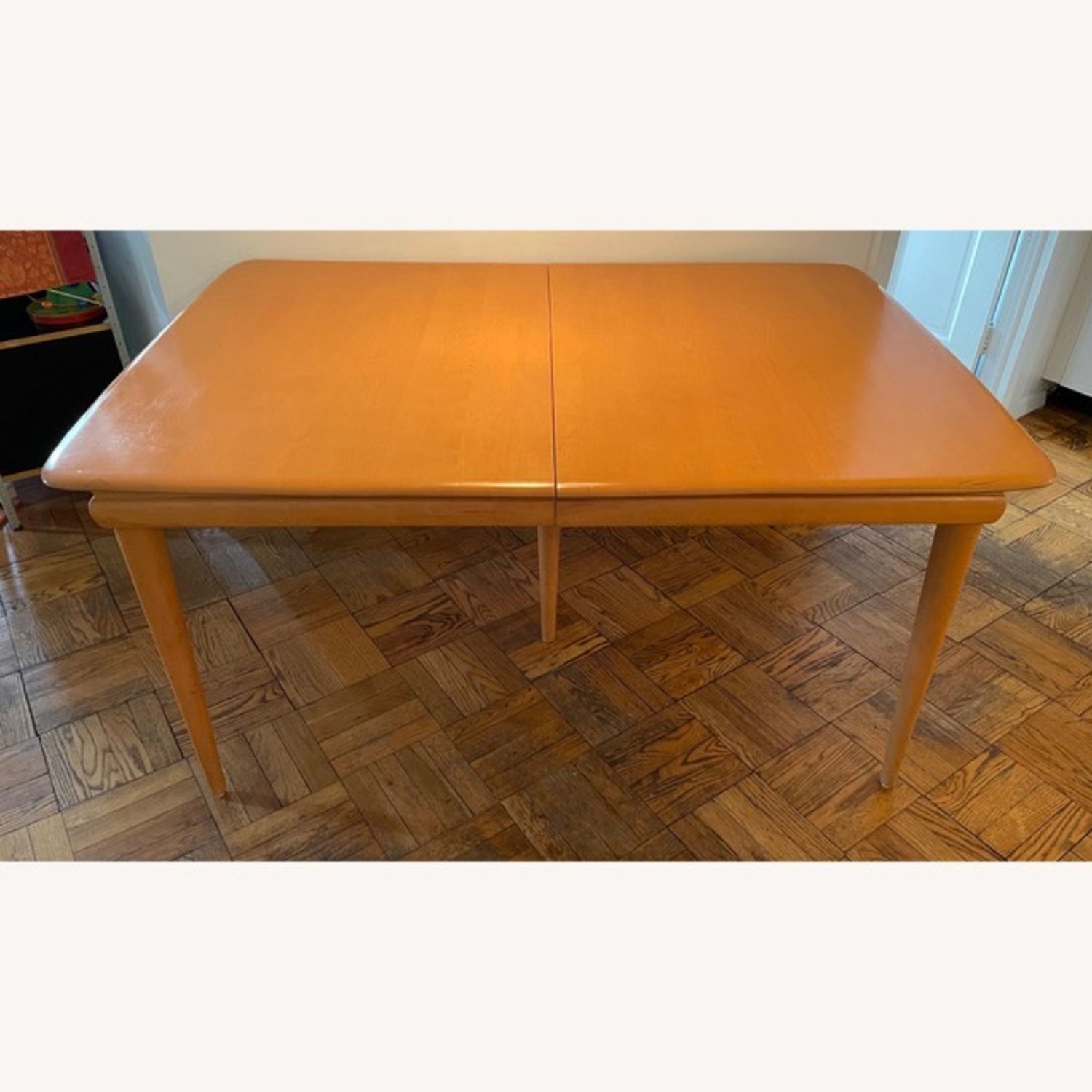

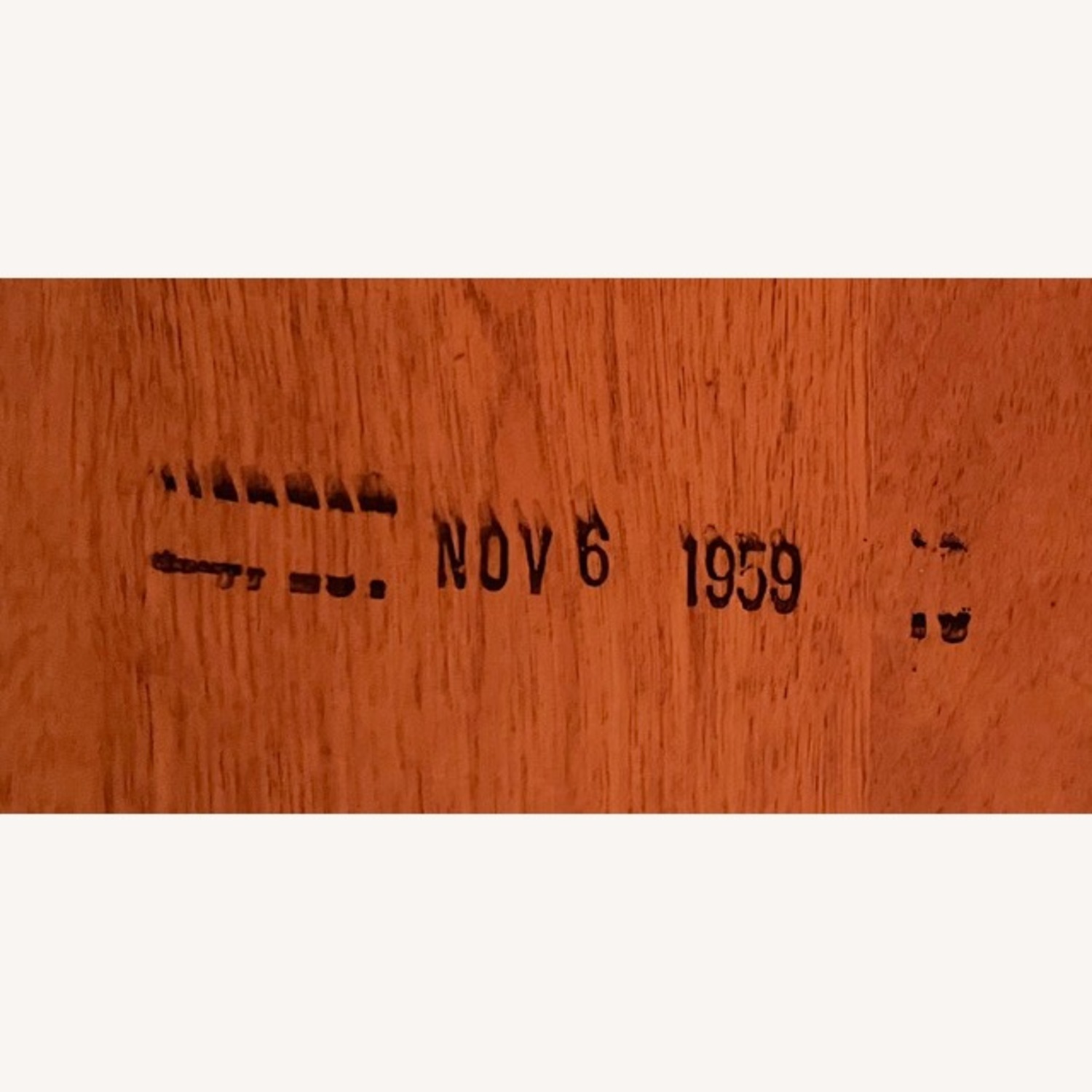
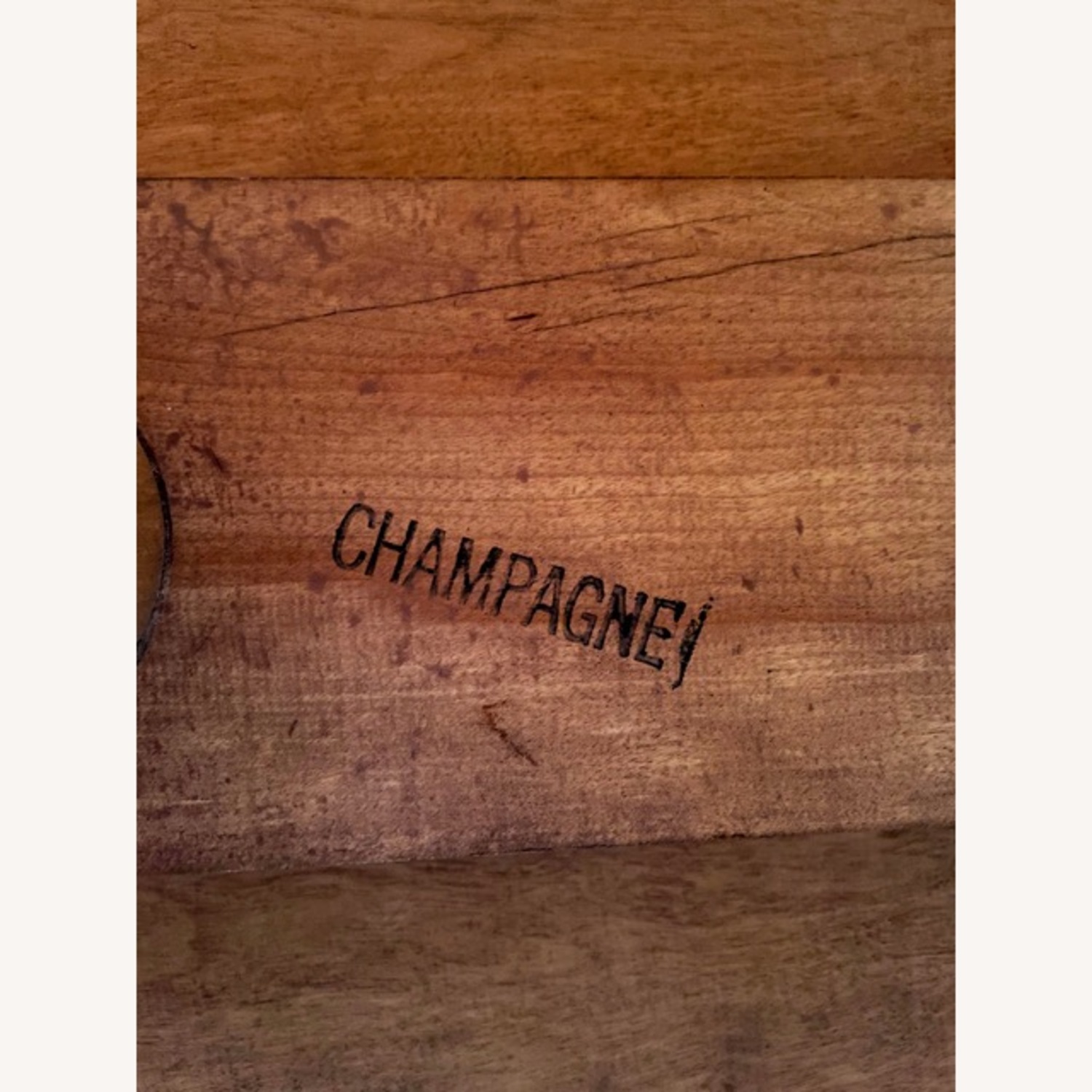
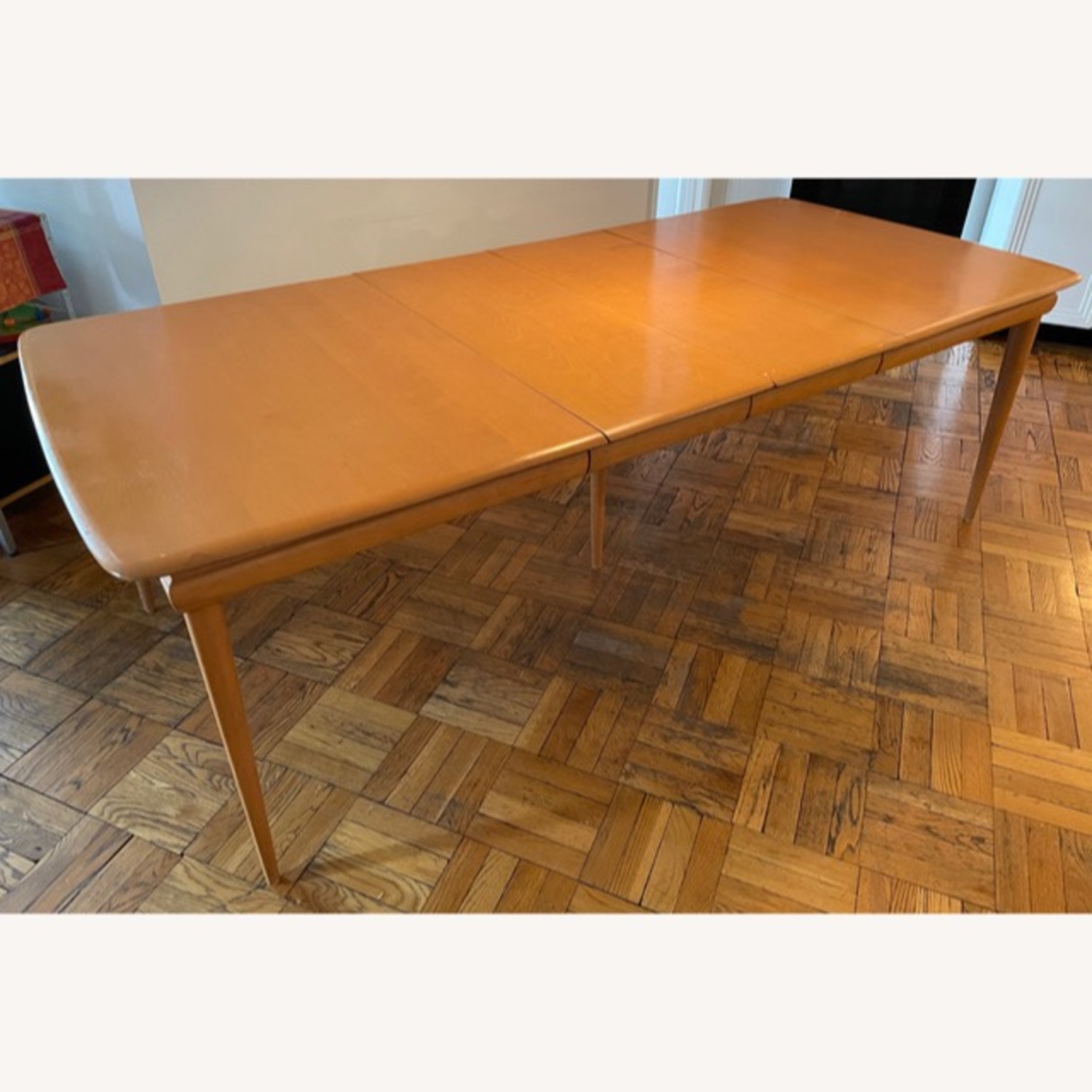
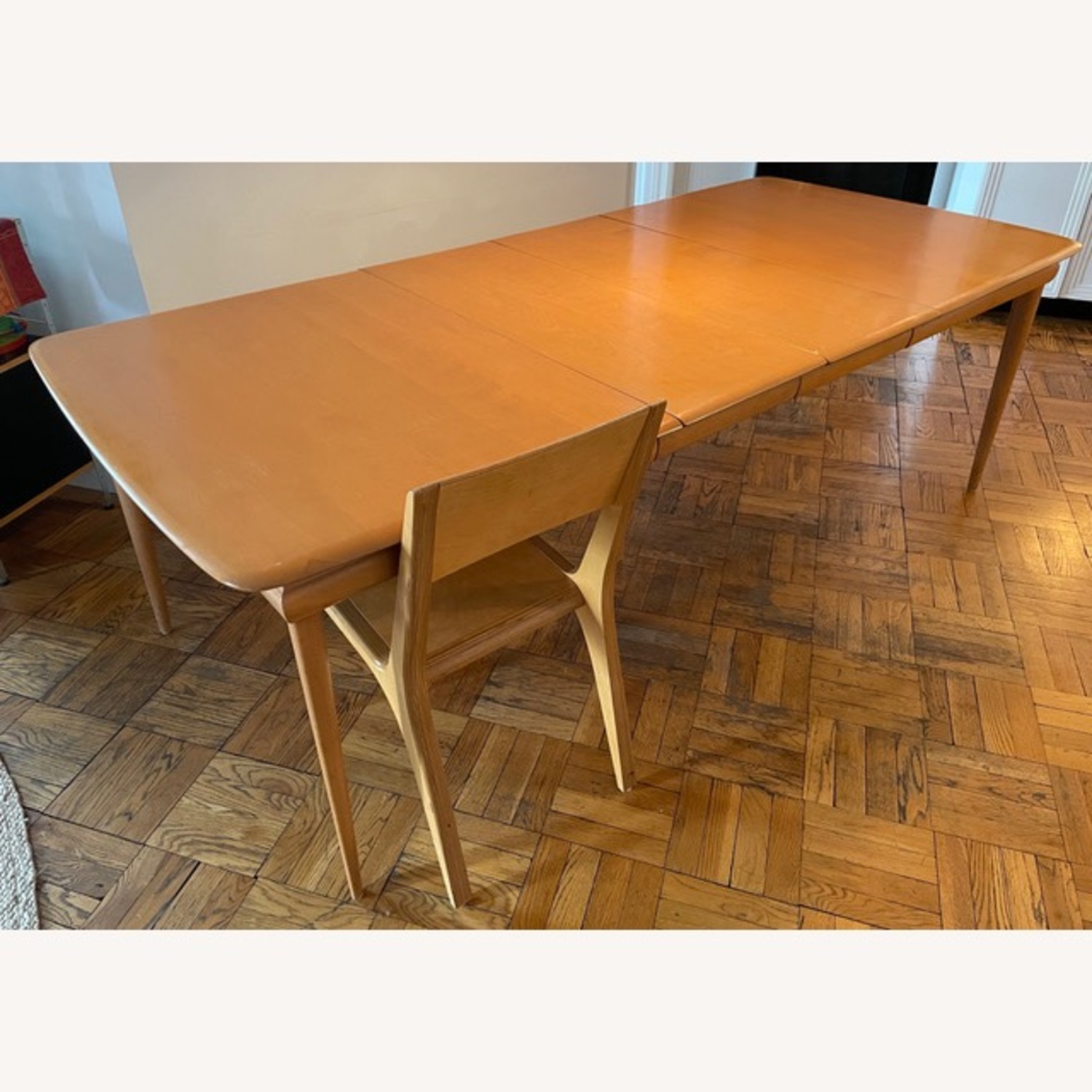
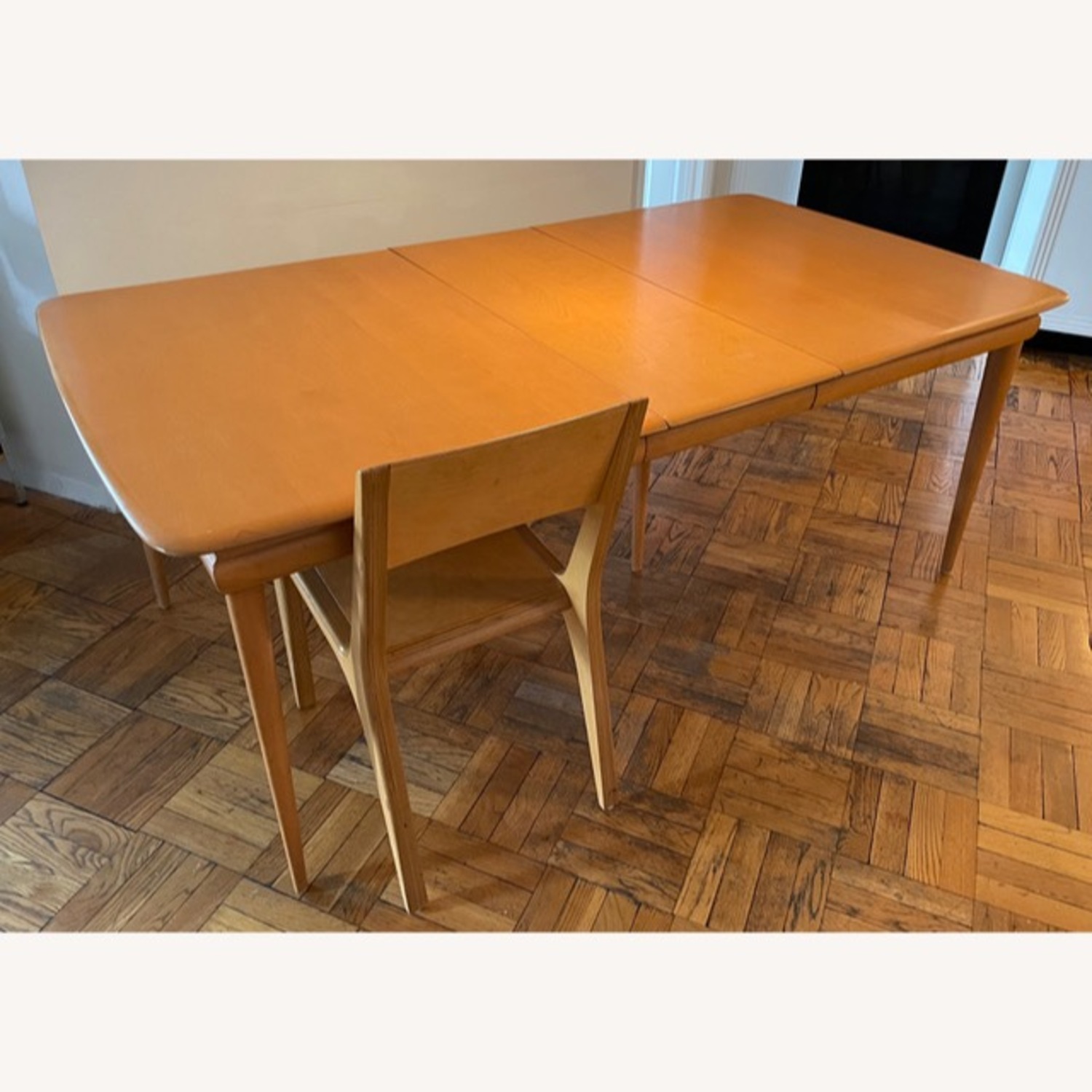
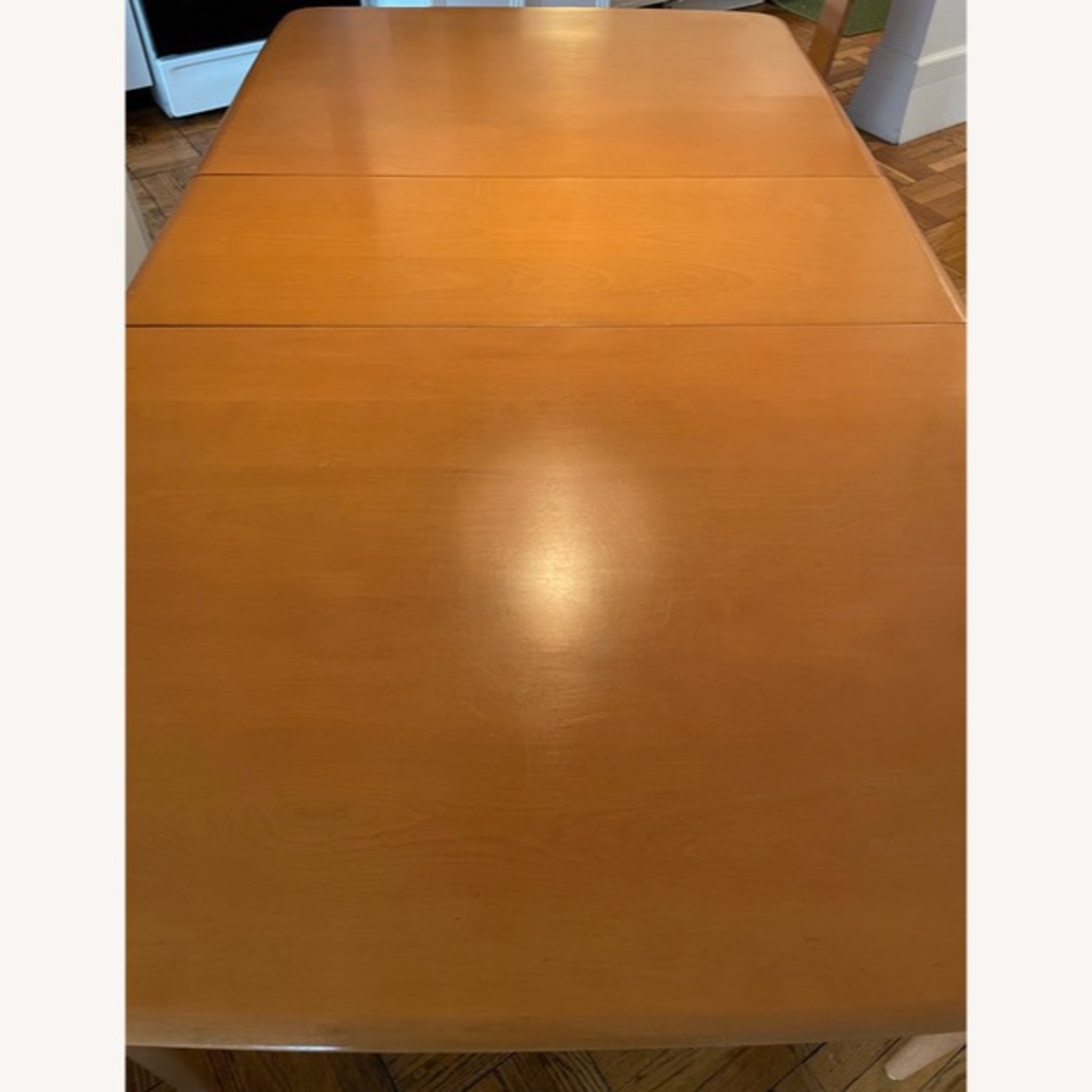
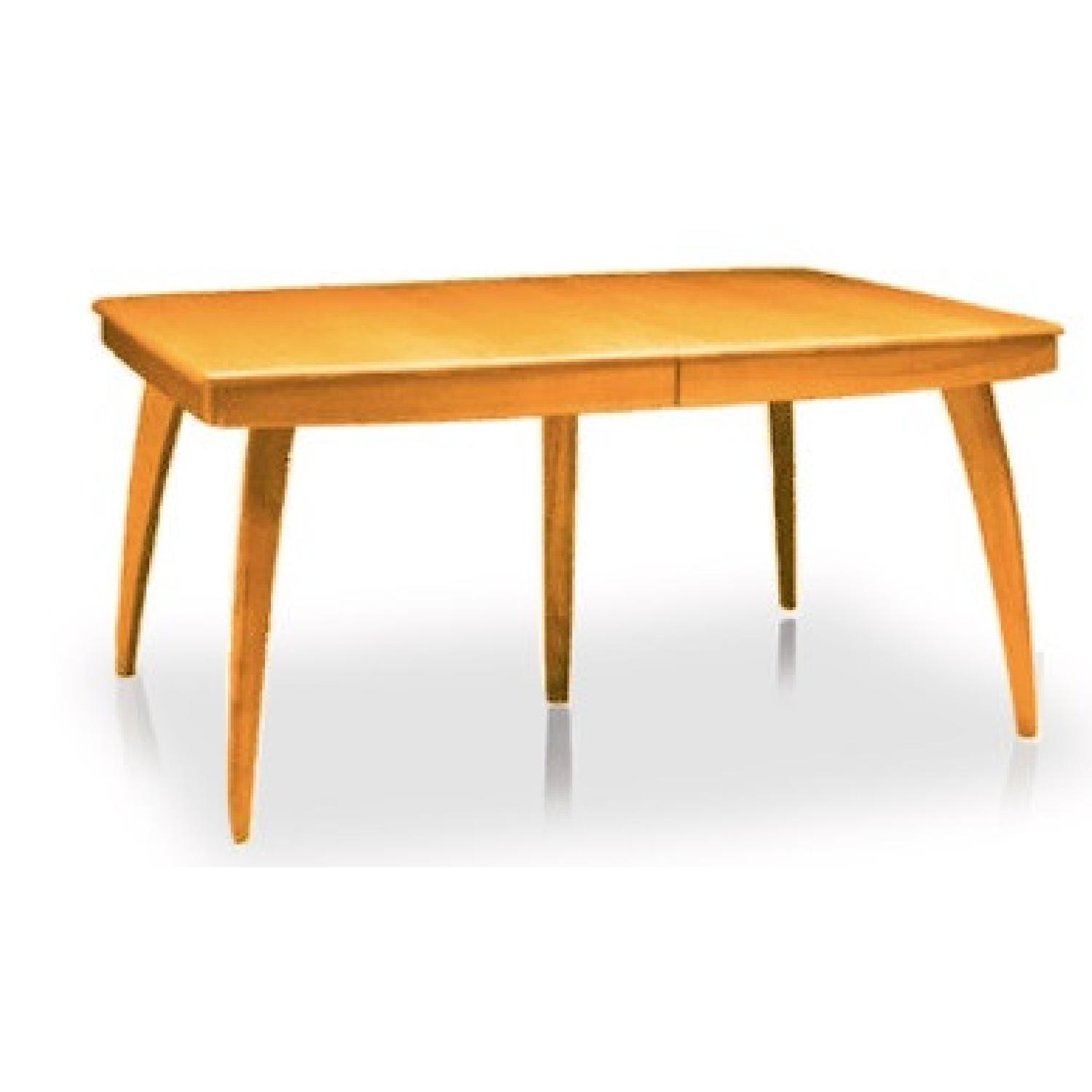

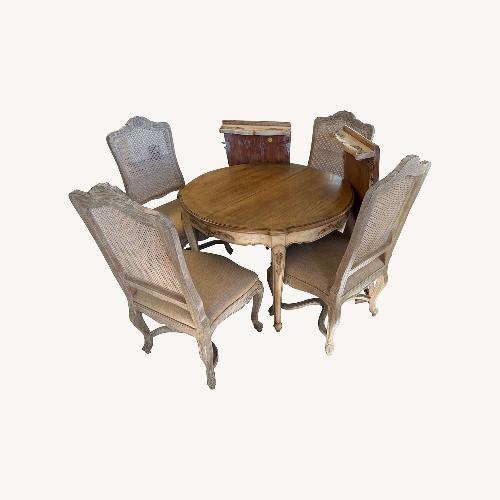
Heywood-Wakefield Dining Table
 or
or 


 Price Drop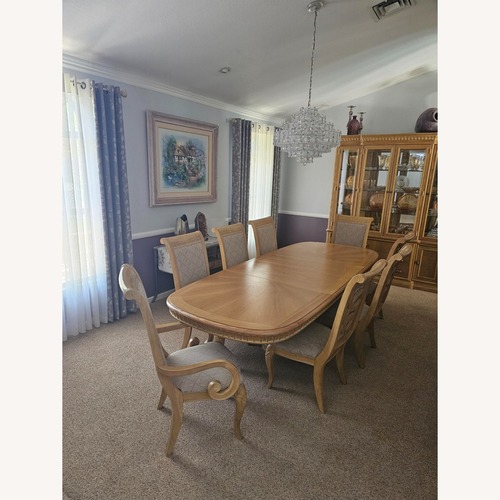
Product details
Seller's Notes:HEYWOOD-WAKEFIELD (UNITED STATES) Created by the 19th-century merger of two venerable Massachusetts furniture makers, Heywood-Wakefield was one of the largest and most successful companies of its kind in the United States. In its early decades, the firm thrived by crafting affordable and hugely popular wicker pieces in traditional and historical styles. In the midst of the Great Depression, however, Heywood-Wakefield reinvented itself, creating instead the first modernist furnishings to be widely embraced in American households. The Heywoods were five brothers from Gardner, Massachusetts, who in 1826 started a business making wooden chairs and tables in their family shed. As their company grew, they moved into the manufacture of furniture with steam-bent wood frames and cane or wicker seats, backs and sides. In 1897, they joined forces with a local rival, the Wakefield Rattan Company, whose founder, Cyrus Wakefield, got his start on the Boston docks buying up lots of discarded rattan, which was used as cushioning material in the holds of cargo ships, and transforming it into furnishings. The conglomerate initially did well with both early American style and woven pieces, but taste began to change at the turn of the 20th century and wicker furniture fell out of fashion. In 1930, the company brought in designer Gilbert Rohde, a champion of the Art Deco style. Before departing in 1932 to lead the Michigan furniture maker Herman Miller, Rohde created well-received sleek, bentwood chairs for Heywood-Wakefield and gave its colonial pieces a touch of Art Deco flair. Committed to the new style, Heywood-Wakefield commissioned work from an assortment of like-minded designers, including Alfons Bach, W. Joseph Carr, Leo Jiranek and Count Alexis de Sakhnoffsky, a Russian nobleman who had made his name in Europe creating elegant automotive body designs. In 1936, the company introduced its “Streamline Modern” group of furnishings, presenting a look that would define the company’s wares for another 30 years. The buoyantly bright, blond wood — maple initially, later birch — came in finishes such as amber “wheat” and pink-tinted “champagne.” The forms of the pieces, at once light and substantial, with softly contoured edges and little adornment beyond artful drawer pulls and knobs, were featured in lines with names such as “Sculptura,” “Crescendo” and “Coronet.” It was forward-looking, optimistic and built to last — a draw for middle-class buyers in the Baby Boom years.
Brand: Heywood Wakefield
Manufacturer Link: https://www.heywoodwakefield.com/mid-century-modern/dinin...
Condition: Used - Good: Minor blemishes that most people won't notice
Wear and tear details: wobbly
Age: 62+ Years Old
Overall Dimensions: Width: 42 inches, Height: 30 inches, Depth: 90 inches

Sustainability Impact
By purchasing this item, you’re contributing to a more sustainable future.
Click to Learn More
44

16

4



Meet our delivery team
Our delivery team does more than move furniture - they’re here to support customers and make the process of buying, selling and moving furniture easy. They make what we do possible.
Learn more about our delivery team